

The demand for mobility and elderly care products continues to grow as more families, healthcare providers, rehabilitation centers, and care facilities look for practical mobility solutions.
For wholesalers and distributors, this creates a strong opportunity to develop a reliable mobility wheelchair product line. However, choosing the right mobility wheelchair manufacturer is critical to building a profitable and sustainable business.
A good supplier should provide more than competitive pricing. Product quality, production capacity, product variety, customization, packaging, delivery, and after-sales support all affect a wholesaler's long-term success.
What Is a Mobility Wheelchair?
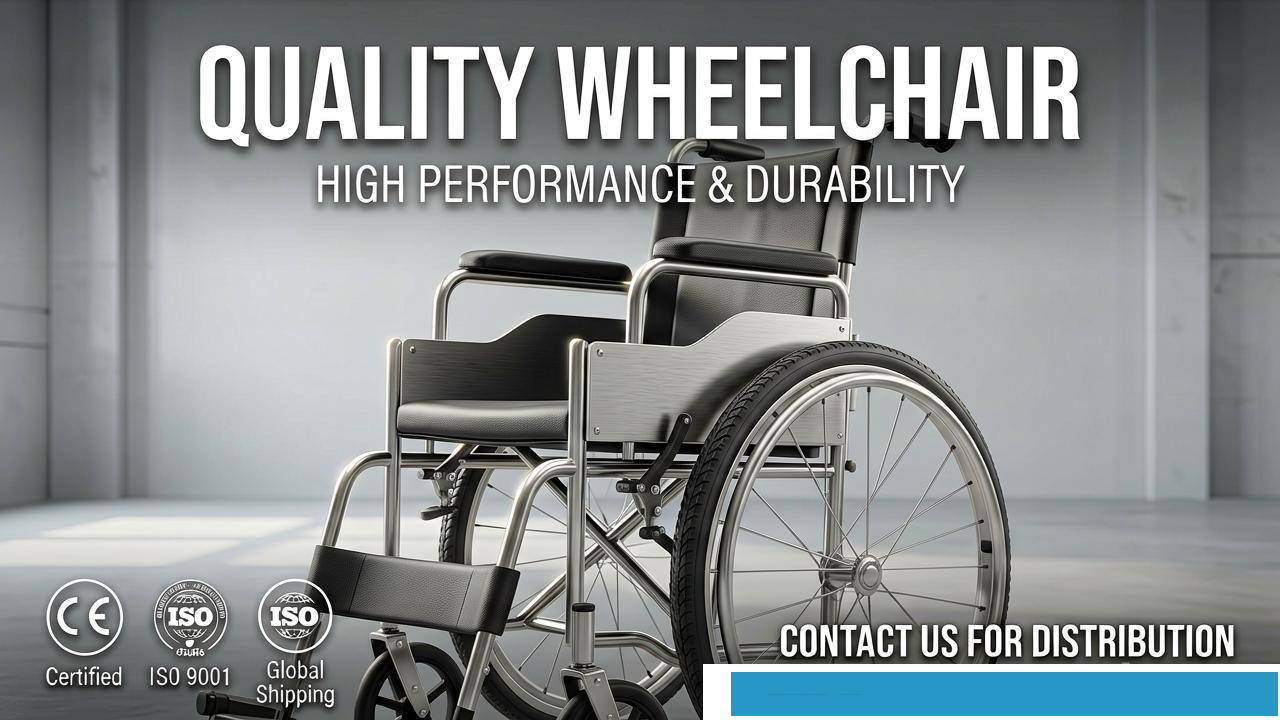
A mobility wheelchair is designed to help people with limited mobility move more safely and conveniently in daily life.
Depending on the user's needs, the product range may include:
- Manual wheelchairs
- Lightweight wheelchairs
- Folding wheelchairs
- Transport wheelchairs
- Mobility chairs
- Attendant-propelled wheelchairs
- Reclining wheelchairs
- Commode wheelchairs
- Rehabilitation wheelchairs
- Customized mobility solutions
For wholesalers, offering several models can help meet the needs of different customer groups and market segments.
Why Is Choosing the Right Manufacturer Important for Wholesalers?
When purchasing wheelchairs in bulk, the supplier becomes an important part of the wholesaler's business.
A low-cost supplier may initially appear attractive, but inconsistent quality, delayed production, poor packaging, or limited product choices can create additional costs later.
A professional wheelchair manufacturer should provide:
Consistent Quality + Stable Supply + Competitive Pricing + Product Variety + OEM Support + Reliable Delivery
This combination allows wholesalers to build a stronger product portfolio and serve their customers more efficiently.
1. Look for Consistent Product Quality
Quality is one of the most important factors when selecting a mobility wheelchair supplier.
Wholesalers should evaluate:
- Frame strength
- Wheel quality
- Brake performance
- Seat and backrest materials
- Folding mechanism
- Armrests and footrests
- Overall stability
- Surface finishing
- Packaging quality
Before placing a large wholesale order, requesting samples is a practical way to evaluate the manufacturer's products.
Consistent quality is especially important for wholesalers because one quality problem can affect multiple customers and damage the reputation of the distributor.
2. Choose a Manufacturer with a Complete Product Range
A wholesaler usually needs more than one wheelchair model.
Different customers have different requirements.
For example:
Home Care
Lightweight and easy-to-fold models may be preferred.
Hospitals
Durable and easy-to-clean models may be more suitable.
Rehabilitation Centers
Adjustable and supportive wheelchair designs may be required.
Elderly Care Facilities
Comfort, stability, and ease of operation may be important.
Medical Equipment Dealers
A broader product portfolio can help them serve more customer groups.
Therefore, working with a manufacturer that offers multiple mobility wheelchair models can make product management and market expansion easier.
3. Compare Wholesale Pricing Carefully
For wholesalers, purchasing cost directly affects profit margins.
However, the lowest quotation is not always the best option.
When comparing wheelchair manufacturers, consider the complete purchasing cost:
Factory Price + Packaging + Shipping + Import Costs + Damage Rate + After-Sales Costs
A slightly higher-quality product with better packaging and fewer complaints may provide a better overall return than a cheaper product with inconsistent quality.
For large-volume orders, wholesalers should also discuss:
- Wholesale pricing
- MOQ
- Mixed models
- Container loading
- Sample orders
- Payment terms
- Production lead time
4. Check the Manufacturer's Production Capacity
A supplier may be able to handle a small order but struggle when your business grows.
Before establishing a long-term relationship, wholesalers should understand the manufacturer's:
- Production capacity
- Manufacturing facilities
- Quality control process
- Warehouse capacity
- Production lead time
- Export experience
- Order management system
A reliable manufacturer should be able to maintain stable supply when your order volume increases.
This is particularly important for wholesalers supplying hospitals, medical equipment dealers, rehabilitation centers, and large retail networks.
5. OEM and Private Label Can Build Your Brand
Many wholesalers eventually want to move beyond selling generic products.
OEM and private label services allow you to sell mobility wheelchairs under your own brand.
Depending on the manufacturer, customization may include:
- Brand logo
- Product labels
- Packaging
- Cartons
- Product colors
- Accessories
- Product specifications
- User manuals
- Marketing materials
Private-label mobility wheelchairs can help wholesalers create a recognizable product line and reduce direct price competition.
Instead of simply asking customers:
"How much is this wheelchair?"
you can gradually build a conversation around:
Brand + Quality + Features + Service + Value.
6. Packaging Matters for International Wholesale Orders
Wheelchairs are relatively large products, so packaging and transportation need to be carefully considered.
Professional packaging can help protect products during:
- Factory handling
- Truck transportation
- Container loading
- Ocean shipping
- Warehouse handling
- Local distribution
Wholesalers should ask manufacturers about carton dimensions, packaging materials, loading quantities, and protection methods before placing a large order.
Efficient packaging can also help optimize container space and reduce unnecessary transportation costs.
7. Consider Your Local Market
The best wheelchair product for one market may not be the best choice for another.
Before importing, wholesalers should research:
- Customer demographics
- Product price range
- Popular wheelchair styles
- Healthcare market requirements
- Distribution channels
- Competitor products
- Local regulations
- After-sales expectations
A professional manufacturer should be willing to discuss your target market and recommend suitable models.
8. Build a Profitable Mobility Wheelchair Product Line
Successful wholesalers should think about the entire product portfolio rather than relying on one model.
For example, a mobility product line could include:
Entry-Level Models
For price-sensitive customers and general home use.
Standard Models
For medical equipment dealers and everyday mobility needs.
Premium Models
For customers looking for additional comfort, durability, or advanced features.
Project Models
For hospitals, nursing homes, rehabilitation centers, and care facilities.
This multi-level product strategy can help wholesalers serve different customer groups without changing suppliers.
Why Work Directly with a Mobility Wheelchair Manufacturer?
Buying directly from a factory can provide several advantages for wholesalers.
Competitive Factory Pricing
Direct sourcing can reduce unnecessary intermediary costs.
Stable Product Supply
Manufacturers can plan production according to your regular purchasing volume.
Product Customization
OEM and private-label options allow you to develop your own brand.
Technical Support
A professional manufacturer can provide product specifications, manuals, images, videos, and other technical information.
Long-Term Cooperation
As your sales volume increases, the manufacturer can support product expansion and new market development.
What Should Wholesalers Ask Before Placing an Order?
Before selecting a mobility wheelchair manufacturer, ask:
Can you provide product samples?
What is your MOQ?
What models are available for wholesale?
Can you provide OEM or private-label services?
What is the production lead time?
How do you control product quality?
How is the wheelchair packaged for international shipping?
How many units can be loaded into a container?
Can you support large projects?
What technical and after-sales support do you provide?
A professional manufacturer should be able to answer these questions clearly.
Build a Long-Term Partnership with a Mobility Wheelchair Factory
For wholesalers, a reliable manufacturer should not be viewed simply as a supplier.
The ideal manufacturing partner can help you:
- Expand your product range
- Improve purchasing efficiency
- Develop private-label products
- Maintain consistent quality
- Reduce supply risks
- Support large orders
- Develop new market opportunities
A strong manufacturer-wholesaler relationship can create value for both sides.
Conclusion
Choosing the right mobility wheelchair manufacturer is an important step for wholesalers who want to build a successful medical and mobility products business.
The right factory should combine reliable quality, competitive wholesale pricing, stable production capacity, product variety, OEM/ODM capability, professional packaging, export experience, and long-term support.
Whether you are a medical equipment wholesaler, mobility products distributor, healthcare supplier, rehabilitation equipment dealer, or project buyer, working directly with a professional wheelchair manufacturer can give you a stronger foundation for market growth.
Looking for a Reliable Mobility Wheelchair Manufacturer?
We work with wholesalers, distributors, medical equipment suppliers, healthcare companies, and project buyers to provide reliable mobility wheelchair solutions.